

Life is full of lessons but one of the most important came from my mother, who once told me to always ‘make sure you have your own money’.
I’ve carried that wisdom with me ever since I earned my first few pounds working as a Saturday shop girl in the local chemist.
With that simple but powerful piece of advice, she sparked what became a lifelong interest in finance.
For more than 30 years, I’ve worked as a finance director in the tech, construction and environmental sectors.
Now semi-retired, I remain deeply passionate about finance especially when it comes to sharing my knowledge with women.
That passion found new focus almost seven years ago when I took up a voluntary role as Director of Finance at Soroptimist International Great Britain and Ireland (SIGBI), a global women’s organisation, with UN consultative status, that champions the rights of women and girls.
Today, I’m proud to serve as President of SIGBI where many of our campaigns focus on financial literacy, equal rights, and the advancement of women and girls.
We are part of a global movement of more than 66,000 Soroptimists who share a vision to educate and empower women.
Good financial literacy is essential for all women – worldwide – as it empowers us to make better decisions and build stronger, more secure lives. It’s the root to better careers and futures.
In a world where women still face systemic financial inequality, having the confidence and knowledge to manage money effectively is more important than ever. My mother was absolutely right.
In the UK, women face a daily struggle. The gender pay gap is real.
Based on the average UK salary of £36,972, the current 13.1% gender pay gap means we earn almost £5,000 less a year.
That’s enough to pay for several months’ childcare, six months average rent or the fees for a part-time degree course.
Women tend to have lower pension savings due to reduced income and periods of part time work or career breaks when we’ve taken time out to raise our families. In later life, we might reduce working hours to care for relatives.
Simply put, we earn less over a lifetime (and it’s a longer lifetime because women statistically live longer than men).
Benefits of Good Financial Literacy
Having money and using it wisely brings financial independence, but it also helps women shape their own lives.
Understanding how to budget, save, invest and plan empowers us and gives us the ability to make choices. It provides security and with it the freedom to make bold, life-changing decisions.
We can choose to leave a bad marriage or controlling partner, we can quit a job that we dislike, or we can fund education and learning to supercharge our career.
Ultimately, financial literacy is about more than pounds and pence – it’s about power, autonomy and building a life on your own terms.
How to Take Control
Marriage can be wonderful but it’s also a legal and financial contract. What happens if it goes wrong?
My advice is to be prepared for every outcome and ensure you’ve got some level of financial independence.
Knowing what assets you have, understanding joint vs personal accounts, and having access to your own money can provide vital security in times of uncertainty.
If you’re employed, start with understanding the Gender Pay Gap. Are you being paid fairly? Research the salaries for similar jobs and negotiate hard.
If you’re taking caring breaks, whether for children or older relatives, then negotiate flexible working, research financial aid for caregivers, protect your pension contributions and, where you can, share the load with other family members.
Plus, on pensions, start contributing early and keep up with pension performance.
Money Rules
There are various money rules but, on the whole, suggestions are 50/30/20 – 50% of income is spent on necessities, 30% is spent on ‘nice-to-haves’ and 20% invested in savings or pensions.
In addition, learn to budget by tracking your expenditure and being aware of incomings and expenses.
Whenever possible, negotiate costs and treat money as a precious resource.
Seek advice where possible. There are excellent charities and organisations offering free women-focused financial guidance.
SIGBI’s grassroots network of clubs also connects women to their communities – we tackle burning issues and build new friendships along the way.
Would you like to take greater control over your finances, understand some of the systemic issues or help drive our campaigns to stamp out injustice and inequality?
Join us today and get involved: https://sigbi.org/club-finder/
By Ruth Healey
ABOUT SIGBI
Soroptimist International Great Britain & Ireland (SIGBI), a registered women’s charity founded in 1934, is part of Soroptimist International, a global organisation formed in 1921, born out of the service movement.
The organisation – which has consultancy status at the United Nations – focuses on empowering women and girls to achieve their full potential and works to eliminate barriers and discriminations that hinder women’s progress.
The charity does this through its 248 clubs throughout the UK, Ireland, Malta, Asia and the Caribbean – over 200 of which are in the UK – and currently has a total of 5,150 members.
SIGBI club members are part of a global movement, Soroptimist International, and are united by a desire to advance the lives of women and girls.
ABOUT RUTH
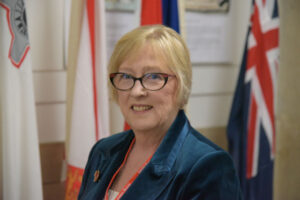
Ruth Healey, President of SIGBI
Ruth Healey is the President of the women’s charity, Soroptimist International Great Britain and Ireland (SIGBI).
She has been the President of SIGBI since 2023, but her journey as a Soroptimist started in 1970, when her mother volunteered Ruth to help with her local club.
She officially joined SI Surrey Hills in 2003, and prior to standing for President, Ruth held many roles across the charity, including Club President, Regional President, and Finance Director of SIGBI.
Her grandmother, mother, two aunts and two cousins have also all been Soroptimists, spanning almost the entire centenary, so it’s truly a family affair.
Born in Cardiff, Ruth went on to study Accountancy at The University of Sheffield and is a qualified Chartered Management Accountant.
With her 30 years’ experience in the business world – having worked as a Finance Director for many businesses with turnovers ranging from £500k to £50m – Ruth brings a wealth of professional knowledge and experience to SIGBI and continues to bring meaningful change and innovation to the organisation.
She is passionate about making positive change for women and girls and is incredibly proud of what the charity has achieved over the last 100 years.
And when she’s not volunteering, Ruth enjoys sailing all over the world.
Ruth’s presidency will run until November 2025.
SIGBI has 248 clubs throughout the UK, Ireland, Malta, Asia and the Caribbean – over 200 of which are in the UK – and has a total of 5,150 members.
LinkedIn: https://www.linkedin.com/in/ruth-healey/










Being in control of your own finances is one of the wisest things anyone can do, particularly women who so often take a step back and defer to partners.
I know so many women who have no idea what their pension pots are worth or those of their husbands. It so important women take control of their finances at every stage.
I agree with Ruth that women need to know how to be financially independent. But all young people need to learn how to manage their finances. They need to he able to use credit and debit cards carefully and not get lured into the world of overspending and spiral into debt. Debt is one if the ways young women can lay themselves open to abuse. Full marks to Ruth for leading Soroptimists in their efforts to improve women’s prospects through education and support.
Good useful advice and I would add “if you need help with anything always ask a Soroptimist. If they can’t help they will find someone who can.